NADA New York
May 13-17, 2026
⁺₊✧
Sarah Esme Harrison, Henry Harper, Tim Johnson
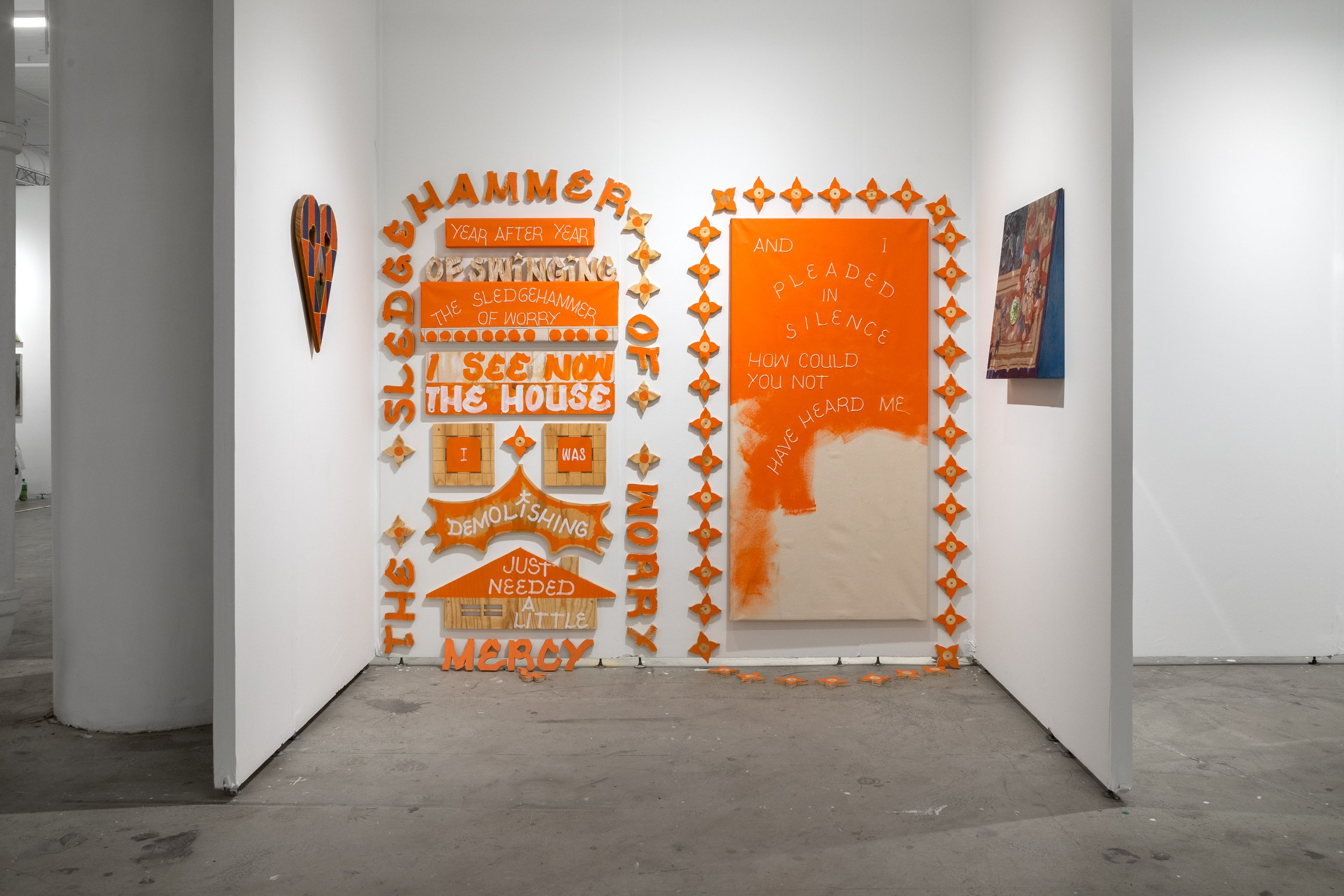
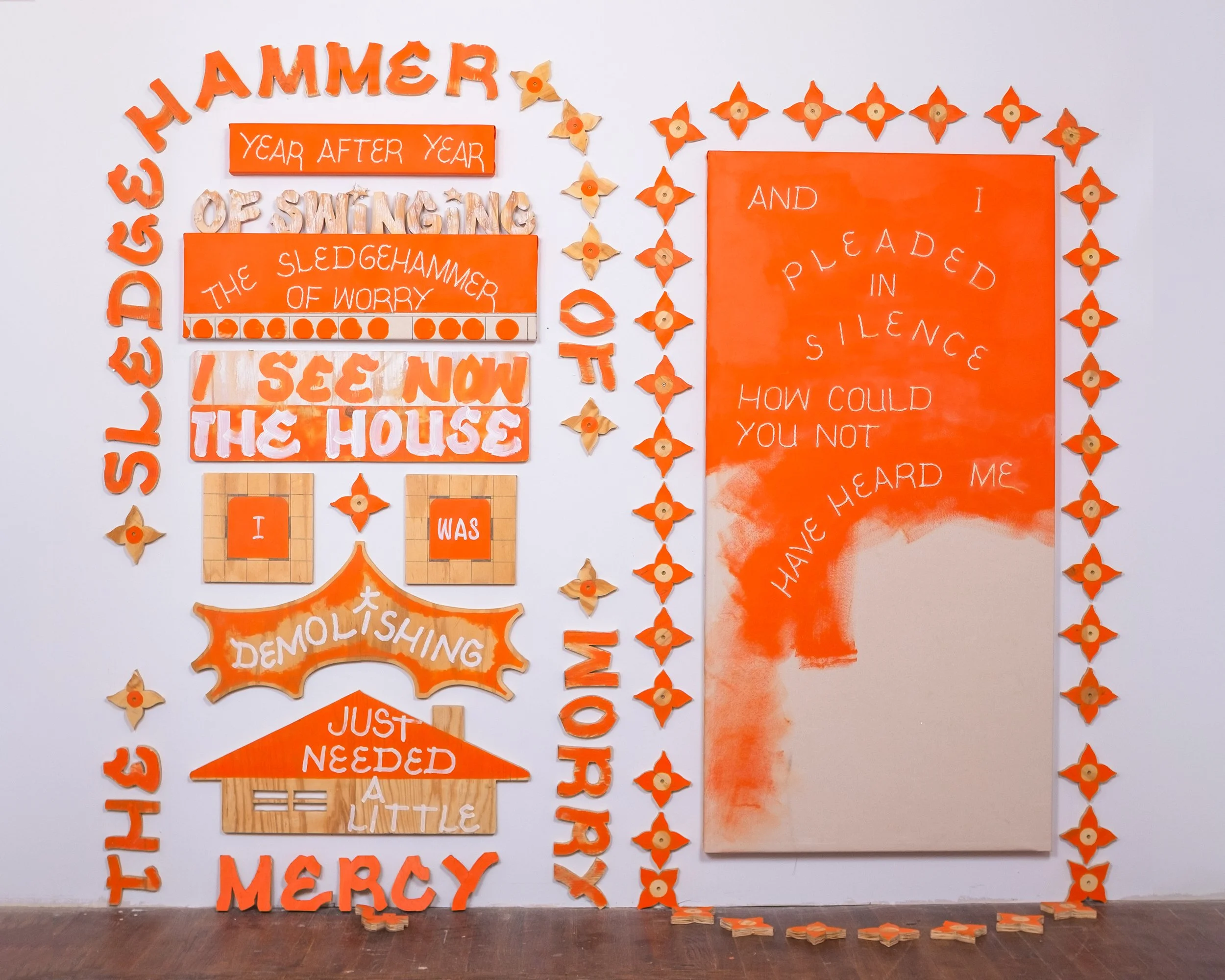
NADA New York installation view by Tim Johnson
The Valley is pleased to share Simple Gifts, a presentation of new works by Sarah Esme Harrison, Henry Harper, and Tim Johnson for NADA New York 2026. Bringing together three artists who rely on repurposed materials from domestic spaces as their source material, we hope to highlight practices rooted in craft and connection to place, two of the core themes in The Valley’s programming.
This selection of works was loosely inspired by the aesthetics of The Shakers, a religious community whose membership peaked in the mid-19th century. They were were known for their ecstatic worship, communal and celibate lifestyle, and a belief in simplicity as a path to divine perfection. Shaker society was radically egalitarian for its time, with men and women sharing leadership and labor. Humility and devotion to order shaped their creative output: furniture, architecture, and household objects stripped of ornament and built with almost obsessive precision. The Shakers also produced “gift drawings,” translations of visions and spiritual messages into delicate, symbolic works on paper.
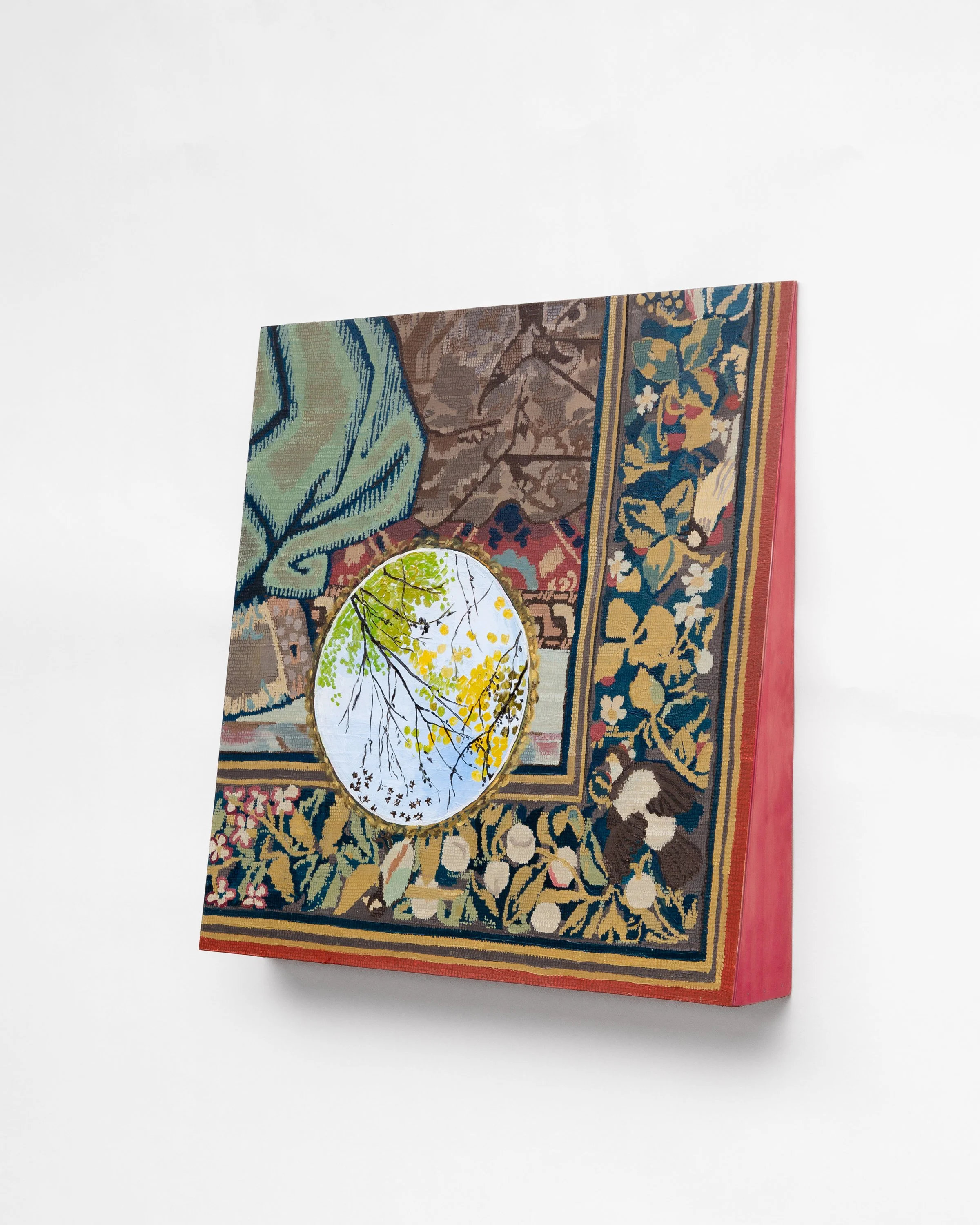
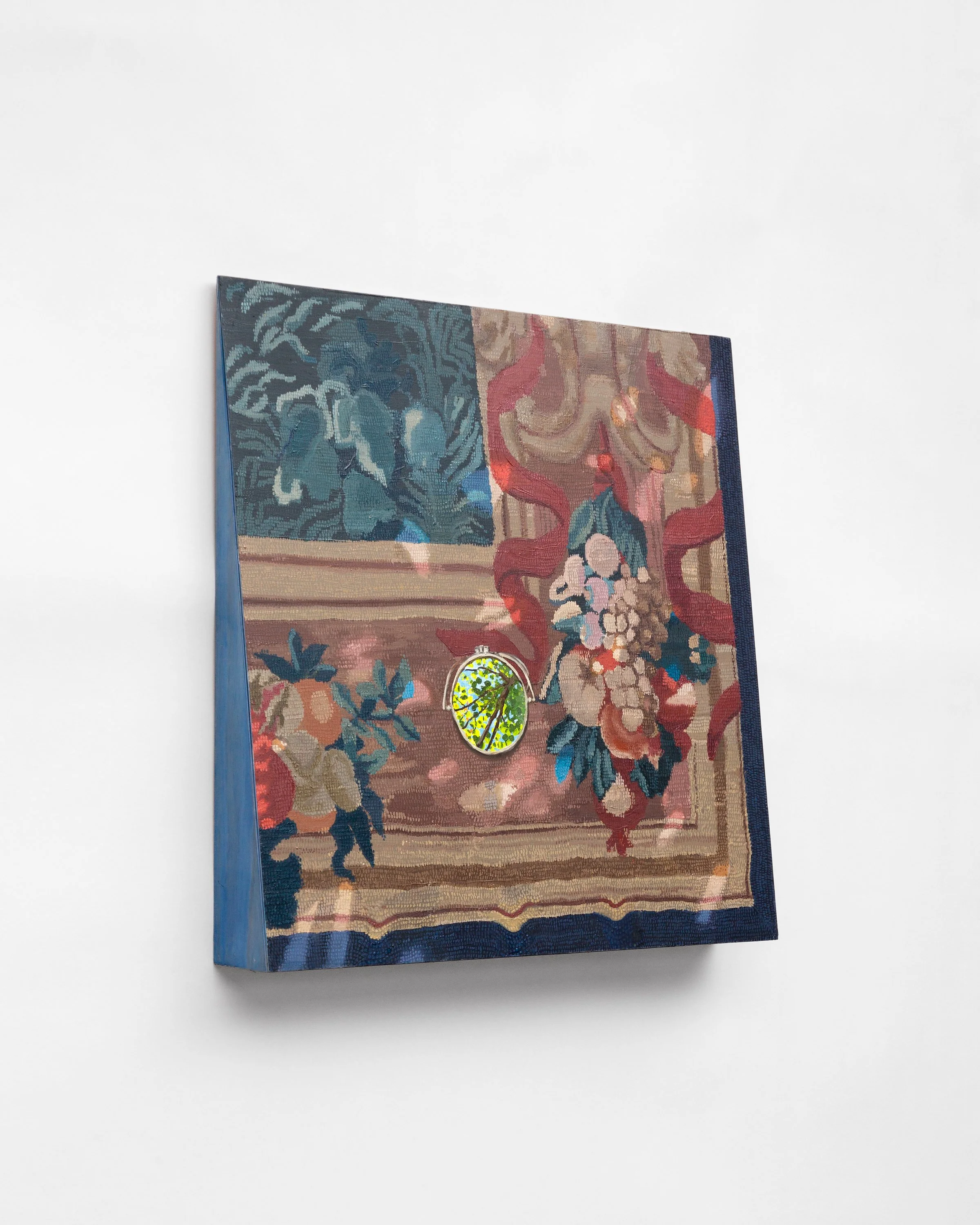
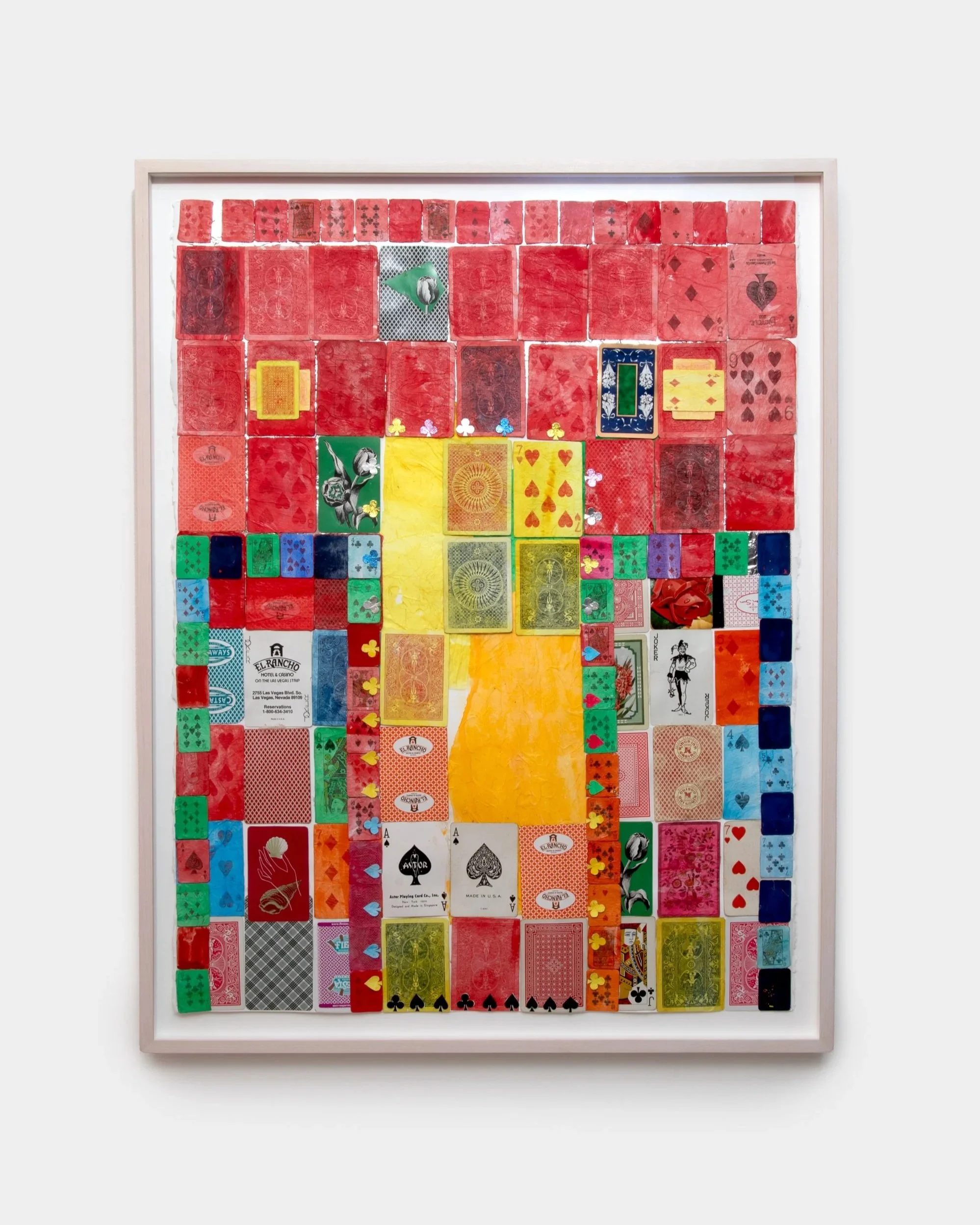
Sarah Esme Harrison’s paintings are typically applied to wedge-shaped wood panels. These forms cannot be seen in their entirety from a single angle, and therefore the paintings cannot be viewed in their entirety at once. Harrison's paintings encourage viewers to move around them in an exploratory way, and to interpret them as both an object and an image. Born and raised in New York City, Harrison’s works often demonstrate a view of the landscape mediated by architectural framing devices - such as gates, screens, and mirrors. Her playing card collages, which often function as improvisational tools in the studio, playfully compliment her paintings and reveal a longstanding aspect of her practice that has rarely been shared.
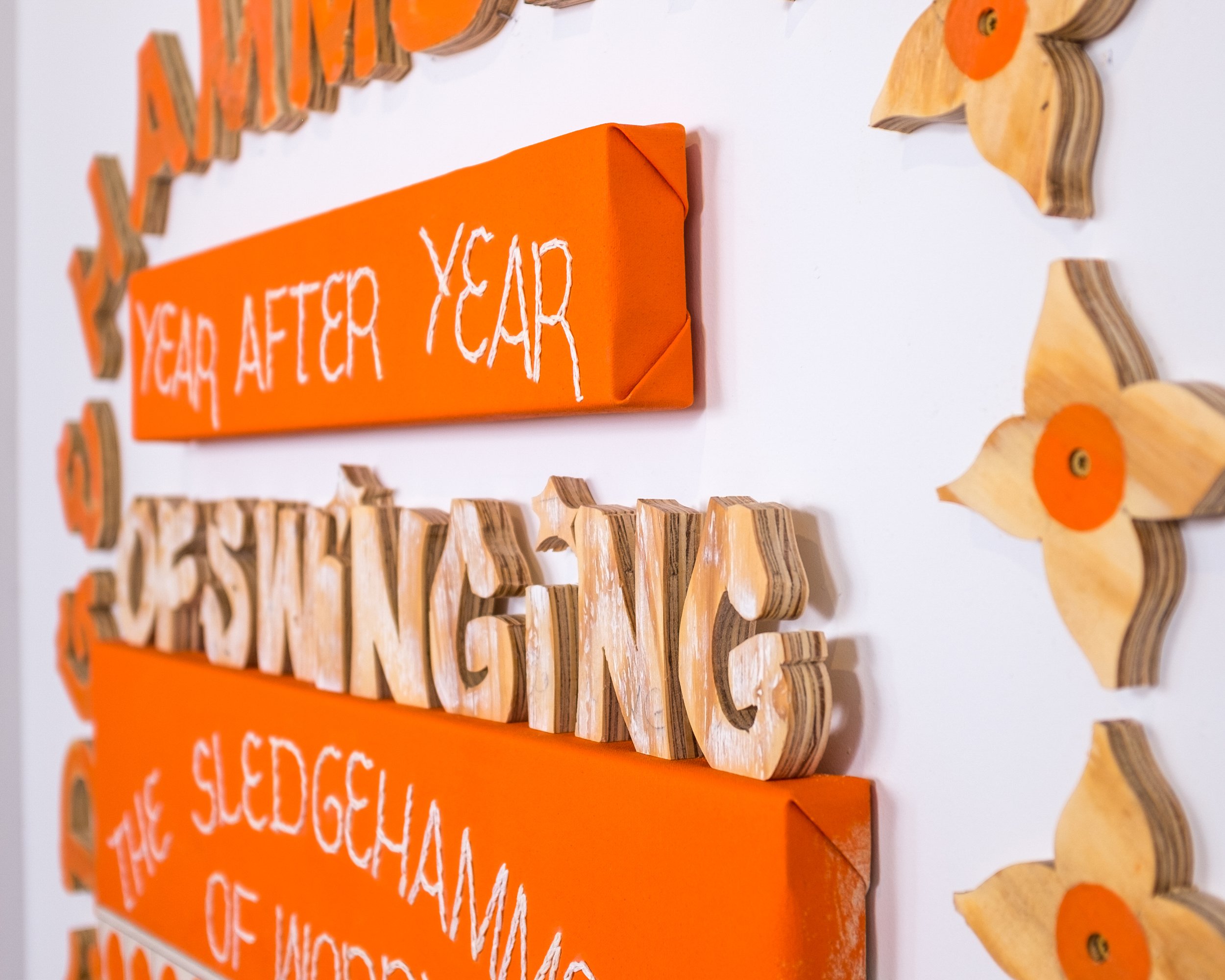
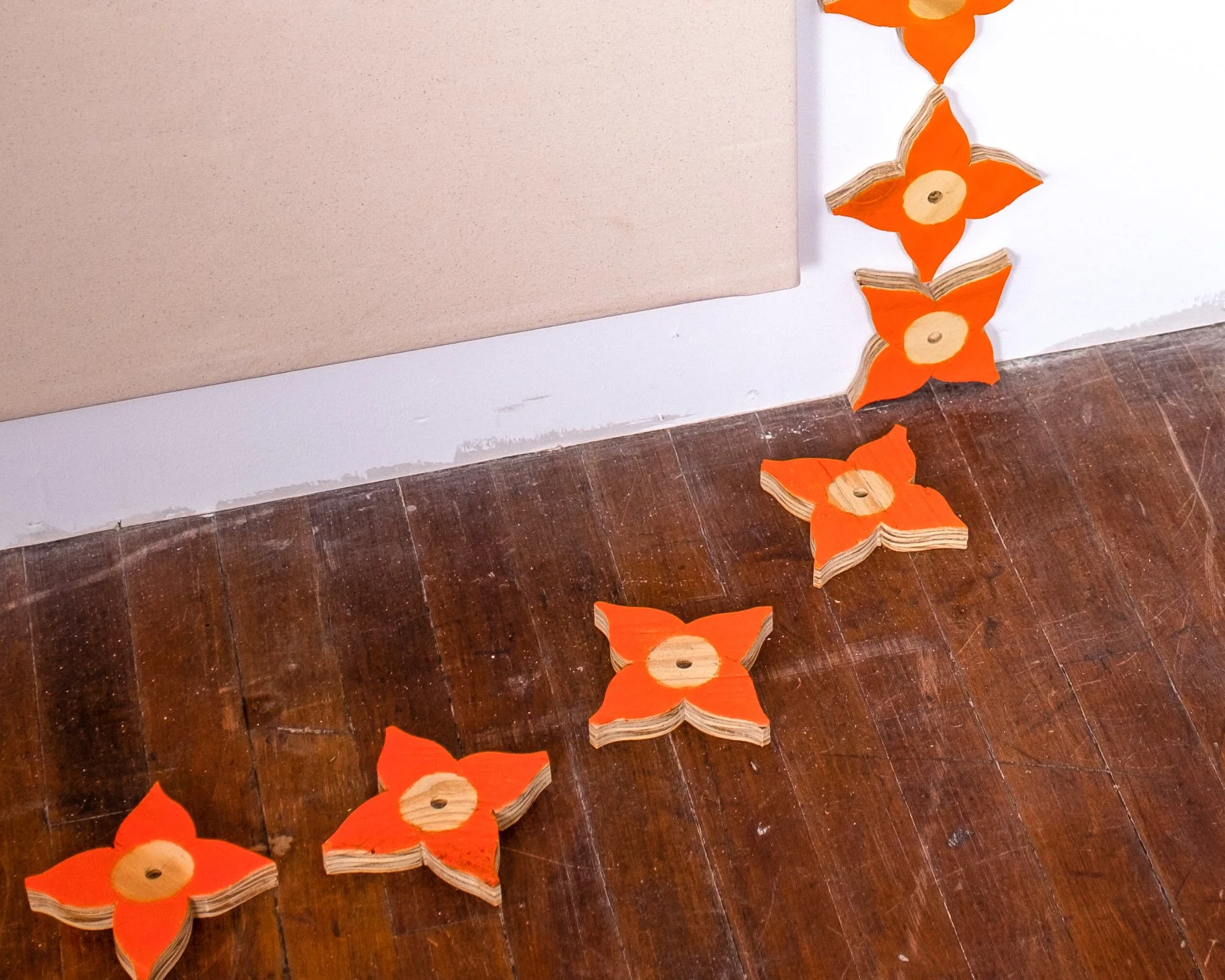
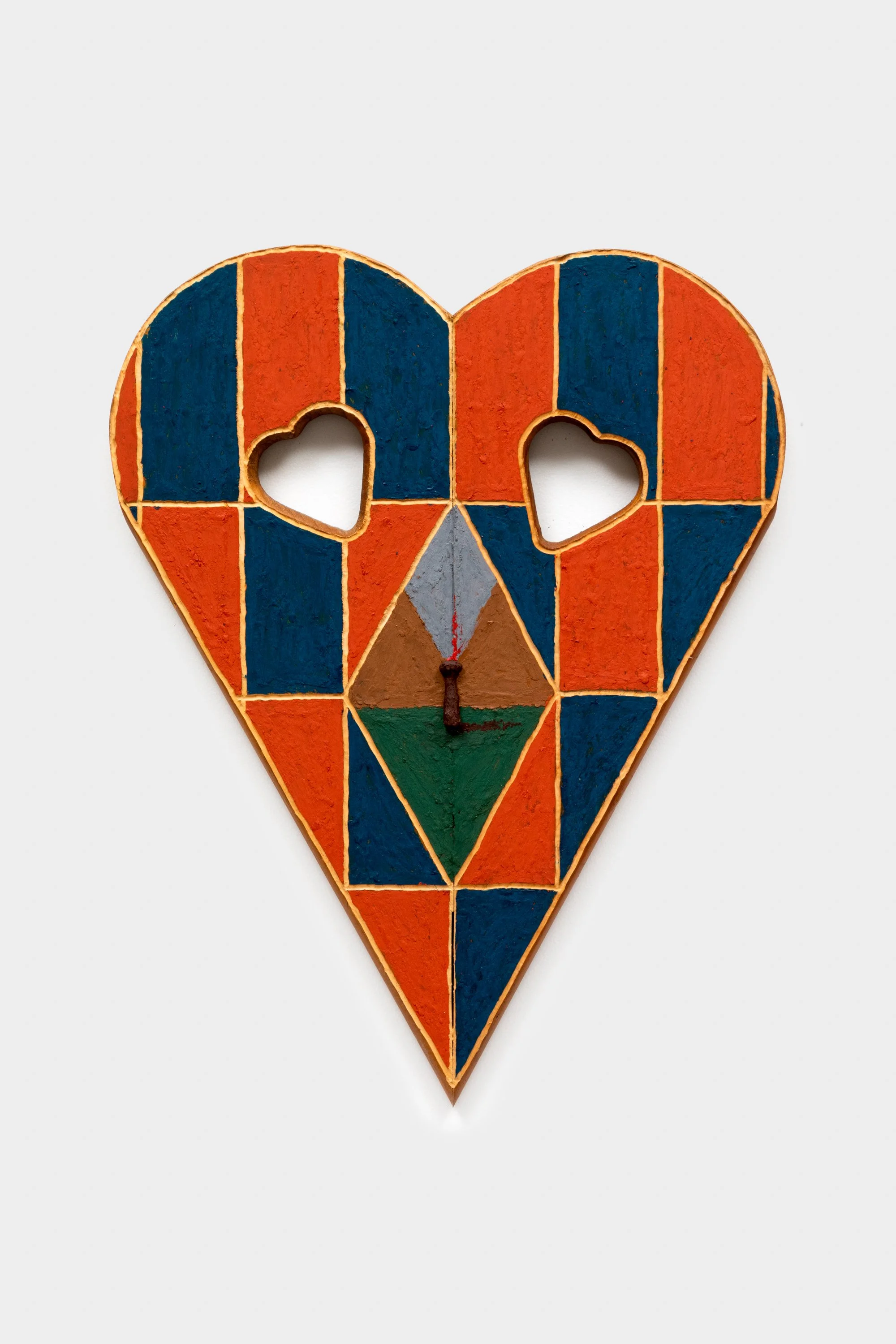
Henry Harper is a self-taught artist who primarily works with chain stitch embroidery on found textiles, often incorporating wooden sculptural elements into installations containing multiple components. Drawing from a background in music and songwriting, Harper creates texts that read as poems and parables. Inspired by American folk art, Mission School art and graffiti, and the DIY ethos of punk in New York City; he developed his distinct visual and poetic style throughout years of trainhopping, making zines, playing house shows, collaborating with other artists, and raising funds for mutual aid. Harper prefers worn and weathered surfaces that hold time and labor in their threads, a tactile memory that joins with his gestures, whether scrawled with paint or meticulously sewn.
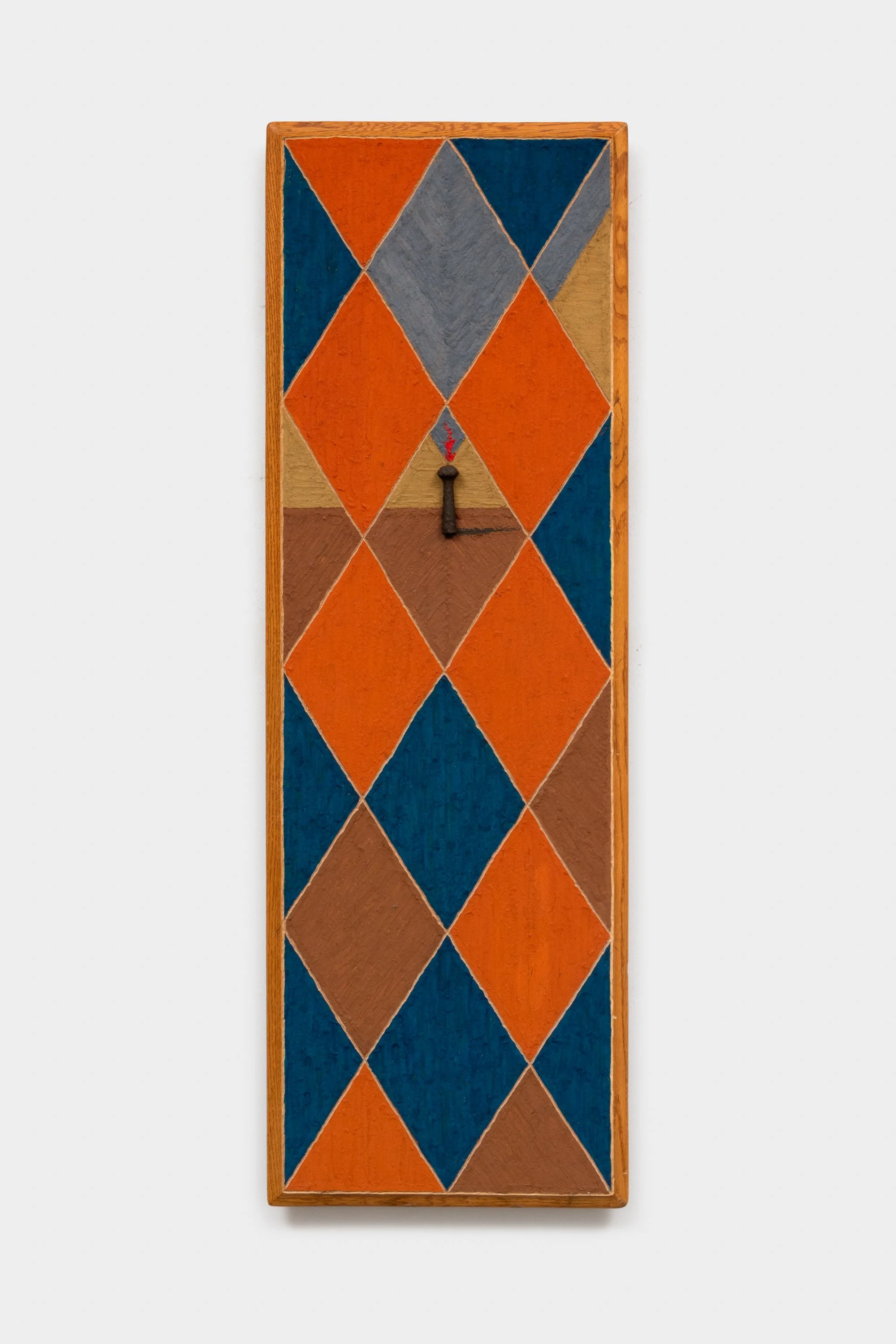
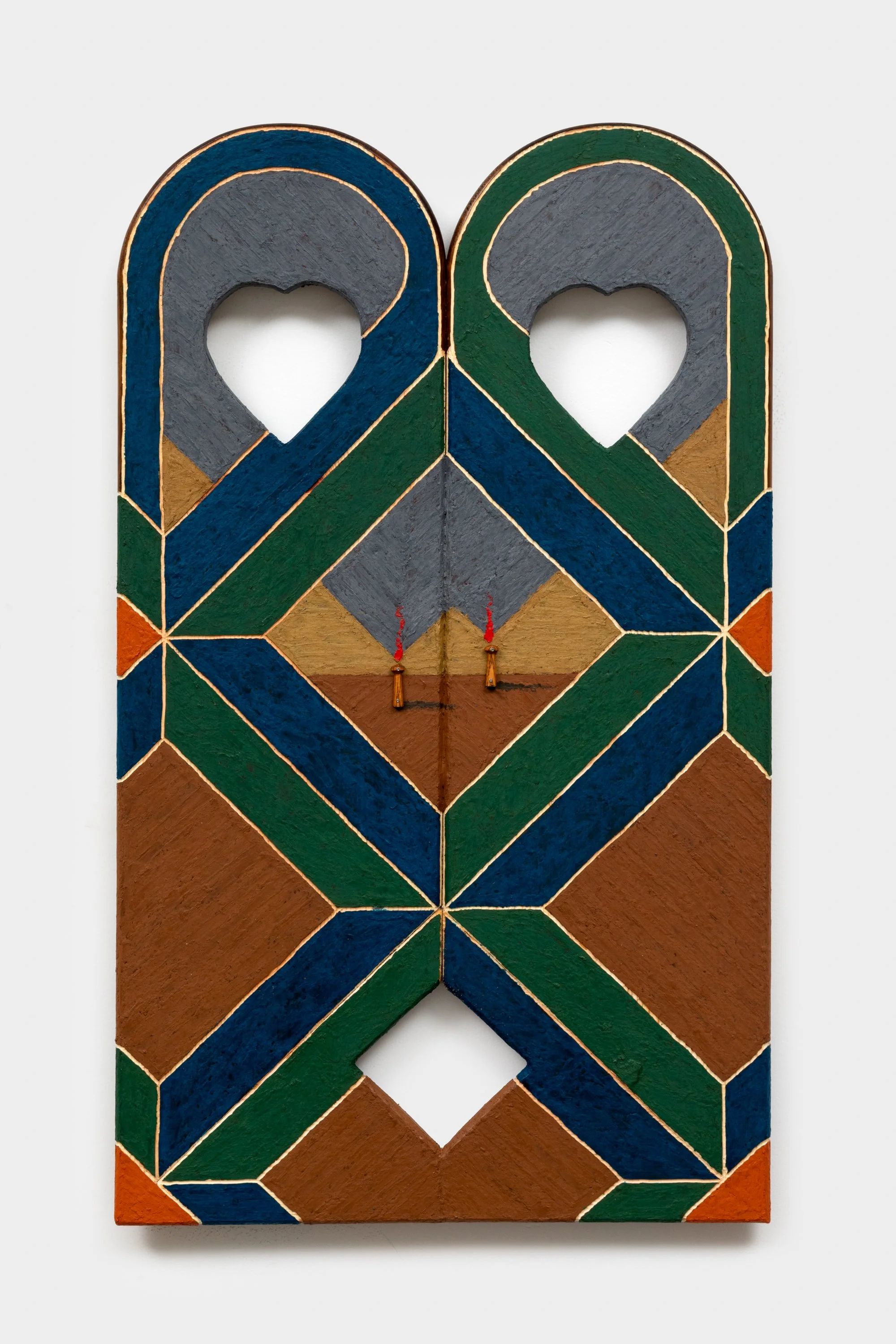
Tim Johnson’s latest body of work expands on his explorations of nostalgia, working with materials sourced from thrift stores, estate sales, and architectural salvage in his home city of Detroit. His sculptures recontextualize remnants of vernacular architecture, design, and regional craft practices into forms that vibrate with tactile familiarity. Working in a palette of industrial greys and blues, contrasted with earthy browns, reds, and greens, Johnson’s sculptures reflect the duality of the Midwestern landscape, lush farmland set against the grit of postindustrial cities.
The Valley has previously presented two solo exhibitions of Sarah Esme Harrison’s work, as well as a two-person presentation at NADA Miami in 2023, alongside Sarah M. Rodriguez. This will be the art fair debut of both Henry Harper and Tim Johnson, though they have both previously exhibited with NADA Member galleries. Harper most recently held a solo exhibition with The Valley in 2025, and Johnson held a solo exhibition with No Place (Columbus, OH) in 2025.
Sarah Esme Harrison (b. 1990, New York, NY) lives and works in Brooklyn and Long Island, New York. She graduated from The Yale School of Art with an MFA in Painting in 2017. Both working in and subverting the tradition of plein air landscape painting, her works ask us to interrogate who is looking, and from what perspective. Beginning her paintings outdoors, she makes observational responses to her surroundings. She then moves the paintings into the studio, where she sees them as distinctly human-made, rather than as a piece of the natural world, as it appears while working outside. Building wedge shaped supports for the painted panels, she exaggerates that they are un-natural, their shape prompting viewers to move around them in an exploratory way. The second layer of her paintings, completed in the studio, takes the form of a gate, a symbol of duality. To invite a close look, they adorn and echo, but at the same time, they keep the viewer out. Conventions of beauty tell us to look, and then they distort what we see. These imposing tangles of wrought iron often take a floriate form, blending with the garden, all the while standing in opposition. Harrison’s paintings point to our imperfect love for nature, which is possessive, extractive, and violent.
Henry Harper (b. 1990, Austin, TX) is a self-taught artist who lives and works in New York City. Raised in Austin, TX, Harper moved to Brooklyn right out of high school and has spent the last 15 years scraping together rent and coffee money through part-time jobs on both sides of the law. Sleeping in warehouses, kitchens, and closets, he uses the fumes of the daily the fear- love-confusion blur to make his work. A modest number of freight train rides, a half dozen makeshift art studios, and by the grace of god seven years of sobriety have all been stars that light up the sky. The North Star, though, always being some form of painting, song, or chain stitched jacket. With roots in punk and DIY ethos, Harper’s interest is in a clear message, one that doesn't take a dictionary to understand.
No material too tattered, no emotion too untempered.
Tim Johnson (b. 1988, Chicago, IL) is an interdisciplinary artist living and working in Detroit, MI. His practice explores memory and its relationship to found objects, presenting an uncanny world shaped by his personal connection to the everyday. Johnson earned his BFA in Photography from Columbia College Chicago in 2012.